
Do You Know The Difference Between Breaks & Sprains?
It is hard to tell the difference between breaks and sprains because the symptoms are so similar, but there are a few distinguishing signs to keep in mind.
What Is a Sprain?
A sprain is when you damage the ligaments (the stretchy bands that hold your bones in place and help keep the joint stable). You usually hear a popping sound with a sprain.
What Is a Break?
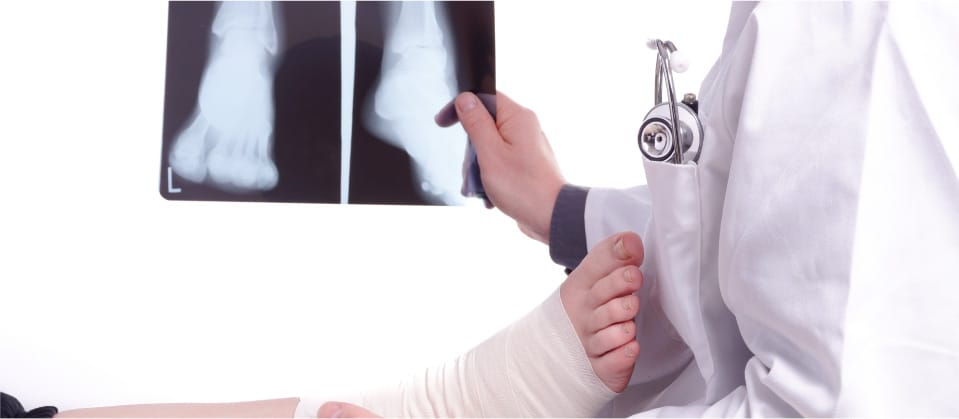
A break is a fracture in the continuity of the bone, and you usually hear a cracking sound with a break.
What Are the Distinguishing Signs?
Even though initial symptoms may be similar, bone breaks are often more severe in nature and the recovery time is much longer. See symptoms below:
Symptoms of Bone Breaks
-
Bruising
-
Pain with movement
-
Swelling
-
Tenderness (directly over bone)
-
Limb is in an unnatural position (deformity)
-
Movement in limb where there is no joint
-
Bone protruding from skin
-
Numbness or tingling
-
Unable to use limb
-
Unable to walk
-
Recovery time may take up to 6 weeks to several months
Symptoms of Sprains
-
Bruising
-
Pain with movement
-
Swelling
-
Tenderness (directly over bone)
-
Recovery time is within days
If ever in doubt about the extent of the injury, keep in mind that immediate emergency care is needed if the patient cannot walk more than 4 steps without excruciating pain or if the patient is experiencing numbness and tingling. Rest assured the emergency physician will evaluate the symptoms and the injury, then establish a treatment plan to ensure proper healing.
What Can You Do For Breaks and Sprains?
First and foremost, it is important to put the patient AT EASE:
Assess the extent of the injury as best you can.
Treat the injury like a bone break until you can get an x-ray.
Ease the patient’s mind with some tender loving care.
Apply ice (wrapped in a towel) to reduce swelling.
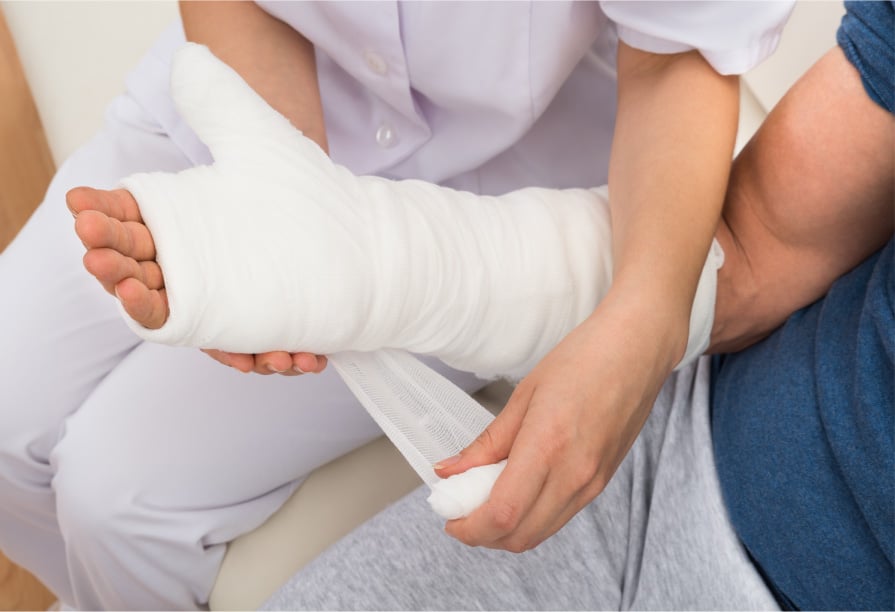
Splint and support injury with pillows and blankets.
Elevate injured part (if possible) to reduce swelling.
FAQs About Breaks & Sprains
What are the complications that can arise if a broken bone or sprain is left untreated?
If a broken bone or sprain is left untreated, several complications can arise. For fractures, improper healing or misalignment can lead to chronic pain, decreased mobility, or even deformity. Untreated sprains can result in persistent swelling, weakness, and instability, potentially leading to further injury or long-term joint issues. Infections can also occur if the bone is exposed, and untreated fractures may cause nerve or blood vessel damage. Seeking prompt medical treatment helps ensure proper healing and prevents these complications.
Can The Emergency Center treat broken bones on-site, or will I be transferred elsewhere?
Yes, The Emergency Center can fully evaluate and treat most fractures and sprains on-site. Our board-certified emergency physicians provide X-rays, pain relief, splinting, and stabilization to support recovery. Only complex cases requiring surgical intervention may be referred to a specialist. In most situations, you’ll receive complete care and leave with a clear plan for healing and follow-up.
How do you confirm whether it’s a break, sprain, or dislocation?
Our board-certified emergency physicians begin with a physical exam to assess swelling, movement, and tenderness, followed by imaging such as X-rays or CT scans to confirm the diagnosis. This allows us to distinguish between a bone fracture, ligament sprain, or joint dislocation and tailor treatment accordingly. Accurate diagnosis ensures the best recovery path and helps prevent long-term complications.
What happens when I arrive with a possible fracture or sprain?
When you arrive, our team quickly evaluates your injury, manages your pain, and performs imaging to identify the extent of damage. Once diagnosed, our board-certified emergency physicians will stabilize the injury using a splint or brace and provide guidance on at-home care and follow-up. The process is designed to keep you comfortable and informed at every step while ensuring your injury heals properly.
What should I do before coming in if I suspect a fracture?
If you believe you’ve broken a bone, try to keep the injured area still and avoid putting weight on it. Apply ice wrapped in a towel to reduce swelling and remove rings or tight clothing near the injury in case of swelling. Do not try to straighten or push a bone back into place. Our board-certified emergency physicians at The Emergency Center will handle stabilization and treatment once you arrive.


What Our Patients are Saying About Us
My visit to the emergency center of San Antonio was amazing. I was seen right away for sciatica pain. Dr. Styskal was amazing. I was treated right away and sent home with my medication. I wish more facilities would practice this without you having to make an additional stop at a pharmacy for medication. I know five stars is the highest I can give but they deserve 100+ stars.
Lizette M. ★★★★★
I was skeptical about going to the Emergency room, because for me ER’s have a bad reputation. My experience here was one of the best experience I’ve ever had. Keith at the front desk was very nice and went above and beyond for me. I forget my insurance card and wanted to know how much my co pay would be. He looked me up with no issue, brought my a wheelchair to ease my pain, as well as started
Mecia T. ★★★★★
My first time coming here, was greeted immediately by Keith and Debbie and helped. When in the back, Nichole wasted no time getting my vitals, checking on how I was feeling, and was super friendly and comforting while doing so. Dr. Erdner was very nice, and informative. Johnny got my CT scan quickly and made the process easy, and fast. All together the staff made my visit a great experience.
Nicole D. ★★★★★
Get Directions To Visit Us
Alamo Ranch
Conroe