
Cysts, Lumps & Abscesses: What’s Harmless and What Needs the ER?
Discovering a new lump under your skin can be alarming. Whether it’s a painful bump that appeared overnight, a cyst that has slowly grown over time, or a swollen area that’s red and tender, it’s natural to wonder if it’s something serious.
The good news is that many lumps and cysts are harmless and don’t require emergency treatment. However, some can become infected, grow rapidly, or signal a more serious underlying condition. Knowing the difference can help you determine when it’s appropriate to monitor a lump at home, schedule an appointment with your primary care provider, or seek immediate emergency medical attention.
At The Emergency Center, our board-certified emergency physicians evaluate a wide variety of skin and soft tissue conditions every day. If a painful lump, infected cyst, or abscess is causing severe symptoms or appears to be getting worse quickly, we’re available 24 hours a day, 7 days a week to provide prompt evaluation and treatment.
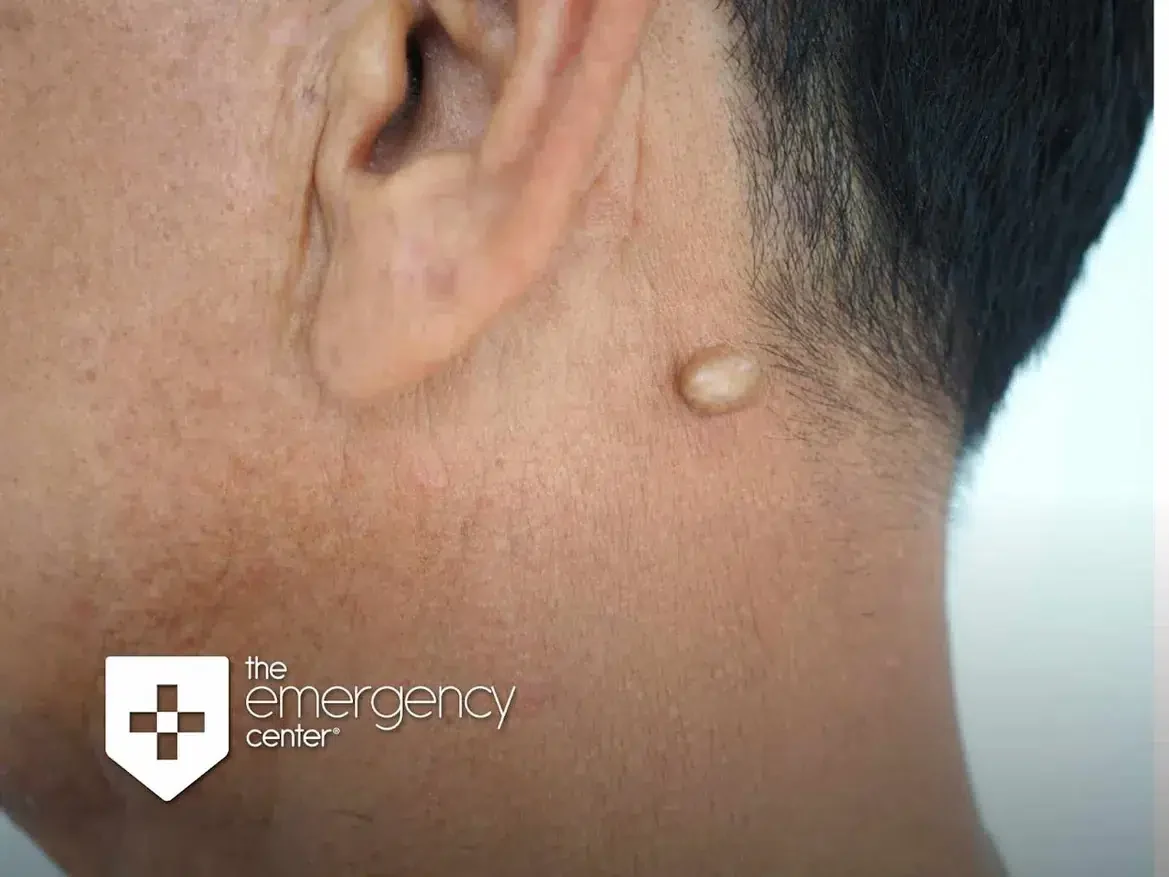
Understanding Cysts, Lumps, and Abscesses
Although these terms are often used interchangeably, they are actually different conditions.
What is a Cyst? Medical Definitions, Types, and Characteristics
A cyst is a closed sac beneath the skin that is typically filled with fluid, pus, air, or other material. Cysts can develop almost anywhere on the body and are usually noncancerous.
Common types of cysts include:
- Epidermoid cysts
- Sebaceous cysts
- Pilar (scalp) cysts
- Ganglion cysts near joints
- Baker’s cysts behind the knee
Many cysts grow slowly and cause little or no pain. Some remain unchanged for years, while others may enlarge or become infected.
Identifying Skin Lumps: Common Causes and Potential Triggers
“Lump” is a general term used to describe any abnormal swelling or growth beneath the skin.
Lumps may be caused by:
- Swollen lymph nodes
- Lipomas (fatty tumors)
- Cysts
- Infections
- Bruising or trauma
- Hernias
- Insect bites
- Less commonly, tumors or cancers
Because lumps have many possible causes, they should be evaluated if they continue to grow, become painful, or are accompanied by other concerning symptoms.
What is an Abscess? Infection Risks and Progression
An abscess is a pocket of infection filled with pus. It usually develops when bacteria enter the skin through a small cut, ingrown hair, insect bite, or blocked gland.
Unlike many cysts, abscesses are almost always painful and often require medical treatment.
Without proper treatment, an abscess can continue growing, spread the infection into surrounding tissue, or even allow bacteria to enter the bloodstream.
Signs That a Lump or Cyst May Be Harmless
Many skin lumps are benign and may simply require observation or follow-up with your primary care physician or dermatologist.
Features that are often associated with non-emergency conditions include:
- Slow growth over months or years
- Soft or rubbery texture
- Moves easily beneath the skin
- Little or no pain
- No redness or warmth
- No drainage
- No fever
Even if a lump appears harmless, it’s still a good idea to have any new or changing growth evaluated by your healthcare provider, especially if it persists.
Warning Signs That a Cyst Has Become Infected
A cyst that was once painless can become infected if bacteria enter the area.
Symptoms of an infected cyst include:
- Increasing pain
- Redness
- Swelling
- Warmth around the area
- Thick yellow or green drainage
- Foul odor
- Fever
- Rapid enlargement
An infected cyst should not be ignored because the infection can spread into surrounding tissue if left untreated.
Common Symptoms of a Skin Abscess
Abscesses often begin as a small, tender bump but can grow quickly over several days.
Common symptoms include:
- Severe pain
- Redness
- Swelling
- Warm skin around the area
- A soft center that may feel like it contains fluid
- Pus drainage
- Fever or chills
- Difficulty moving the affected area because of pain
Abscesses can occur almost anywhere on the body but are commonly found in the:
- Armpits
- Groin
- Buttocks
- Face
- Neck
- Under the breasts
- Around hair follicles
Because abscesses involve infection, many require drainage by a medical professional.
Why You Should Never Pop or Drain a Cyst at Home
One of the biggest mistakes people make is trying to squeeze or pop a cyst or abscess at home.
While it may seem like a quick solution, doing so can:
- Push bacteria deeper into the skin
- Make the infection worse
- Cause significant bleeding
- Increase scarring
- Spread infection to surrounding tissue
- Delay proper healing
Attempting to drain an abscess yourself can also be extremely painful and often doesn’t remove the entire infection.
If a lump appears infected or continues worsening, it’s safest to seek medical evaluation rather than trying home treatment.
When to Visit the Emergency Room for a Lump or Abscess
Although many cysts and small lumps can wait for a primary care appointment, some symptoms require prompt emergency evaluation.
Seek emergency care if you experience:
- Severe or worsening pain
- Rapid swelling
- Redness spreading away from the lump
- Fever or chills
- Thick pus draining from the area
- Difficulty moving the affected body part
- Swelling near the eye or face
- Difficulty swallowing or breathing due to swelling
- A large abscess that continues growing
- Red streaks extending away from the area
- Symptoms of infection after recent surgery or injury
These symptoms may indicate a serious skin infection that requires immediate medical treatment.
Diagnostic and Treatment Options at The Emergency Center
When you arrive at The Emergency Center, our emergency physicians will carefully evaluate the affected area and determine the cause of your symptoms.
Depending on your condition, treatment may include:
Physical Examination
Your physician will assess:
- Size and location
- Pain level
- Signs of infection
- Whether fluid or pus is present
- Whether surrounding tissue is involved
Imaging
If necessary, ultrasound or other diagnostic imaging may be used to determine whether a lump contains fluid, identify the size of an abscess, or evaluate deeper infections.
Incision and Drainage
For many abscesses, the most effective treatment is a minor procedure called incision and drainage.
After numbing the area, the physician makes a small opening to allow the infected material to drain. In some cases, the wound may be packed with sterile dressing to allow continued drainage while healing.
This procedure often provides immediate relief from pressure and pain.
Antibiotics
Not every abscess requires antibiotics, but they may be prescribed if:
- The infection is spreading
- The abscess is large
- You have fever or chills
- You have diabetes or a weakened immune system
- The infection involves the face or other high-risk areas
Pain Management
Our team can also help manage discomfort while treating the underlying condition.
Practical Tips for Preventing Skin Infections and Cysts
While not every cyst or abscess can be prevented, good skin care can reduce your risk.
Helpful prevention tips include:
- Wash cuts and scrapes promptly with soap and water.
- Keep wounds clean and covered.
- Avoid picking at pimples or cysts.
- Practice good hand hygiene.
- Don’t share razors, towels, or personal hygiene items.
- Manage chronic conditions such as diabetes, which can increase infection risk.
- Seek treatment early if a skin infection begins to worsen.
When in Doubt, Get It Checked
Most lumps, cysts, and skin bumps are not medical emergencies, but it can be difficult to know which ones are safe to watch and which require immediate treatment. Pain, redness, rapid growth, fever, or drainage are all signs that shouldn’t be ignored.
Prompt evaluation can help prevent complications, relieve discomfort, and ensure you receive the appropriate treatment before a small problem becomes a much larger one.
If you’re experiencing a painful lump, an infected cyst, or a suspected abscess, The Emergency Center is here to help. Our board-certified emergency physicians provide expert evaluation and treatment 24 hours a day, 7 days a week, so you can get the care you need—when you need it most.